UPDATE:
Due to the measures Harvard University has taken concerning the Coronavirus Disease 2019 (COVID 2019) outbreak,
Dr. Samuel's talk has been *POSTPONED*.
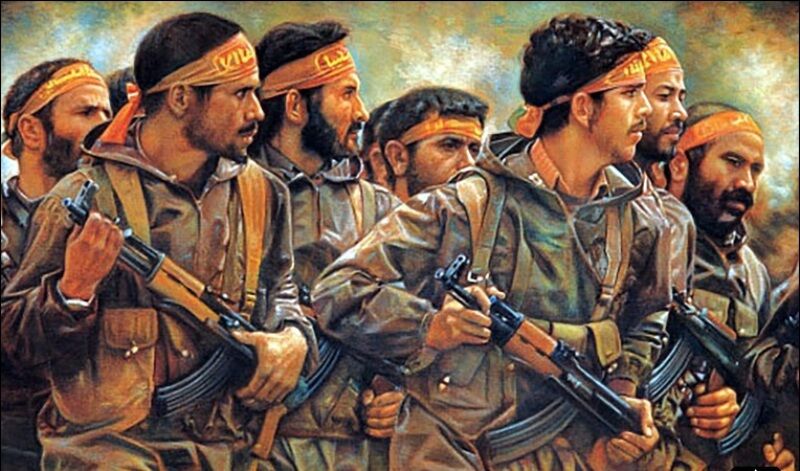
This talk, and the book on which it is based, will analyze how Iran’s Islamic Revolutionary Guards Corps (IRGC) has documented the history of the Iran-Iraq War (1980-88) in its own publications on the conflict. Examining the IRGC’s history of the war, Dr. Annie Tracy Samuel’s research reveals, demonstrates that both the experience of the Iran-Iraq War and the project of composing the historical narrative of the war are fundamental to the IRGC and accordingly to understanding the organization. Their significance stems from several factors, including: the ways in which the war and the ongoing revolutionary process in Iran influenced one another; the war’s role in legitimizing and institutionalizing the IRGC and the new Islamic Republic as a whole; the expansion and evolution of the IRGC through its participation in the war into the powerful organization it is today; and the fact that the Revolutionary Guards view history as a vital tool for shaping national identity and power.
Further, the interpretation and significance of the war’s history as it has been written by the Revolutionary Guards challenge many of the prevailing scholarly and popular characterizations of the Islamic Republic, which are often based on Western sources and perspectives. In particular, the latter have given much weight to the rhetoric Iranian leaders used during (and since) the war and the importance of faith and revolutionary fervor in understanding the Islamic Republic and its prosecution of the conflict. However, the history of the war authored by the Revolutionary Guards demonstrates that this is an essentialized understanding based on a literalized interpretation of the regime’s rhetoric, and one that is not reflected in the IRGC sources or the Islamic Republic’s actions. Those reveal in contrast that the war was a weighty and calamitous matter for Iran that the Revolutionary Guards and others struggled to prosecute and survive, and that to do so they relied on all the tools at their disposal, which included both faith—religious commitment, revolutionary ideology, and popular morale—and firepower—careful strategic planning, organized force and offensive power, and military professionalism.
Moderated by Dr. Payam Mohseni, Director of the Project on Shi'ism and Global Affairs.
Annie Tracy Samuel is an assistant professor of history at the University of Tennessee at Chattanooga (UTC). Prior to joining the UTC faculty, Prof. Tracy Samuel served as a research fellow at the Harvard Kennedy School’s Belfer Center for Science and International Affairs. She holds a Ph.D. and M.A. (magna cum laude) in history from Tel Aviv University and a B.A. in history and political science from Columbia University. She specializes in the modern history of Iran and the Middle East.
LOCATION:CGIS South South S050 Thomas Chan-Soo Kang Room, 1730 Cambridge St., Cambridge MA 02138 STATUS:CONFIRMED DTSTART:20200311T213000Z DTEND:20200311T230000Z END:VEVENT END:VCALENDAR