
Factionalism, Privatization, and the Political Economy of Regime Transformation
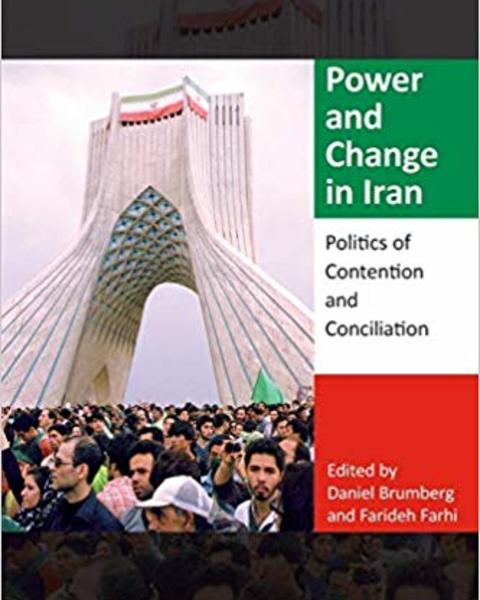
Publication information:
Abstract
The contested Iranian presidential election of 2009—which ignited the most serious challenge to the authority of the Islamic Republic since the revolution—seemed to be a turning point in Iranian politics. The violent repression of the Green Movement by the coercive forces of the state and the timely inauguration of President Mahmud Ahmadinejad to his second term in the presidency were ominous signs of a closing of the Iranian regime and a turn toward military dictatorship. The expanding role of the Islamic Revolution’s Guard Corps (IRGC) in the economic and political realms, the strengthening of the Supreme Leader’s power and position, and the sidelining of the reformists from the ruling elite all pointed to a fundamental change in the nature of the regime. Indeed, that US Secretary of State Hillary Clinton declared Iran to be “morphing into” a dictatorship demonstrates the significance of this issue for both contemporary world affairs and domestic Iranian politics, presenting a bleak image of the future evolution of its political system. The specter of Iranian dictatorship thus came to loom prominently in both Western policy and academic circles alike.
The unexpected election of moderate candidate Hassan Rouhani to the presidency in June 2013, however, has brought this thesis under serious question. Despite the strength and attraction that such a view may have held earlier, these striking developments did not necessarily add up to a reworking of the logic of the political system as was commonly assumed. While there is no doubt that we were witnessing a transformation in the political order of the country, the same pieces of evidence pointing to Iranian dictatorship simultaneously presented a completely different image of the state of Iranian affairs. The ongoing shifts and changes begun with the election of Ahmadinejad in 2005 were instead internal transformations within the confines of the same system of multiple contentious power centers that had been established with the revolution. In other words, to recognize institutional modifications and shifts in power within the regime is one thing—and to argue that these institutional alterations produce a change of regime type to dictatorship is another. To avoid conflating these two seemingly similar—yet vastly different—processes, our knowledge of the precise institutional sites of transformation and the exact mechanics by which these changes have been occurring within the Iranian regime needs to be more fully developed.
This chapter explores the complexity of these processes and assesses the degree of change and continuity in the Iranian political system in light of the tumultuous events unfolding since 2009. Why have elite power relations in Iran been unsettled, and what is the impact of these factional fluctuations of power and processes of change on the institutional structure of the Iranian regime itself? It is critical to ask whether the manner by which institutional alteration occurs within the regime was conducive to the long-term monopolization of power by a single political faction. If so, has the multifactional and competitive nature of the regime been replaced by one of dictatorship, as may have appeared to be the case? Or, is the regime’s system of elite conflict management and institutional restraint a durable feature that will persist in the foreseeable future?