
Research Focus
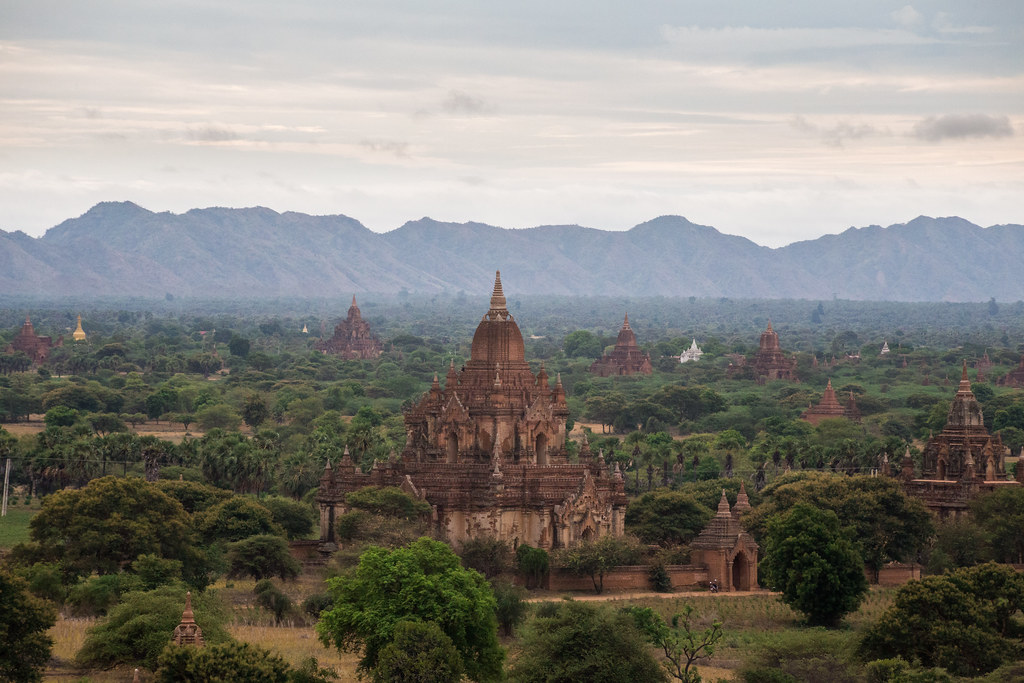
Photo caption: Bagan, Myanmar
Diaspora or diaspeirein in Greek means ‘to scatter about’ stemming from the experience of the Greek colonization of Asia Minor. In its own context, the Greek diaspora produced explosive cultural creativity and hybridity amongst the cosmopolitan societies of the eastern Mediterranean and beyond. The phenomenon of the diaspora is by no means limited to the Greek experience however; in the context of Shi’ism which contains complex supra-historical and transhistorical transcendence, we find wealthy resources of study from its layered historical narratives, to rich and deep philosophical and theological doctrines; and from progressive jurisprudential debates, together with mythic and symbolic rituals, to the impact of political conflict and institutions. These dynamics surrounding Shi’ism are present across the globe in transnational communities, including in Southeast Asia — a world region understudied when it comes to Shi’a Islam and diaspora communities.
Southeast Asia is home to some 650 million people, approximately 242 million of them ascribing to the Islamic faith among whom include complex manifestations of Shi’ism. Despite the rich presence of Shi’a communities in this important world region, Shi’ism has been quite understudied and underappreciated within regional and international studies of Southeast Asia. This initiative of The Project on Shi’ism and Global Affairs at the Weatherhead Center undertakes the ambitious study on the patterns and forms of Shi’a behavior, heritage, communal dynamics and their diverse experiences in this part of the world. This includes understanding how indigenous Shi’a Muslims interact with “native” cultural and religious traditions within their home countries including in Malaysia, Indonesia, Thailand, Myanmar and Philippines. We approach the presence of Shi’a Islam as a vibrant community in a plural ethnic, linguistic, and national region which has many “host traditions” claiming indigenous authenticity.
The Southeast Asian Shi’ism research track at the Project approaches the study of Shi’ism both “horizontally” (in terms of social relations) and “vertically” (in terms of intellectual and religious dynamics). The documentation and study of the diverse art and culture of Shi’a communities are also a major focus of this research track. The development of Shi’ism in this region is divided into three timeframes for the purposes of research: 1) Shi’ism during classical era; 2) Shi’ism during early modern and modern eras; and, 3) contemporary Shi’ism post 1979 Iranian Revolution.
The classical era consists of study on the history of Shi’a Islam in this region. It examines the richness of Shi’ism which was particularly embedded with Sufi Islam in this region. We also examine the syncretization of Shi’ism with local traditions and beliefs that were heavily influenced by Hindu and Buddhist teachings. There also exists a plethora of classical manuscripts with Shi’a elements waiting to be transliterated, translated and analyzed scholastically. The modern era also includes several important research fields. The origins of large transnational Shi’a communities will be researched, including the arrival of Shi’a Muslim merchants to Thailand and Indonesia, to the coming of colonial powers such as the British with its policy of allowing migration and trading that brought in Shi’as from South Asia (including modern India and Pakistan) to various territories across Southeast Asia. Finally, the post 1979 Iranian Revolution heralded a major turning point in the contemporary history of the region and led to a resurgence of ‘political Shi’as’ influenced by the Iranian Revolution which in turn created political and social tensions with the status quo. This phase in particular offers interesting contemporary subjects for study including the rise of sectarianism in the region and multiple efforts to de-escalate it together with human rights violations as many local Shi’as are struggling to defend their identities and rights. This research track will also look closely to the impact of modern communication and technology developments including the impact that spread of the internet has had on the region, spread of global mass media culture, “viralization” of social media, and virtual culture that constructs and re-constructs diasporic feelings, experiences, and identities.